
Beer Kegs and Beer Gas: A Complete Guide for Pubs, Bars and Home Bars
Serving a consistently good pint requires more than choosing the right beer. You also need the correct keg, coupling, dispense equipment and beer gas. The gas used in a draught system affects how smoothly the beer pours, how much carbonation it retains and the texture and head produced in the glass.
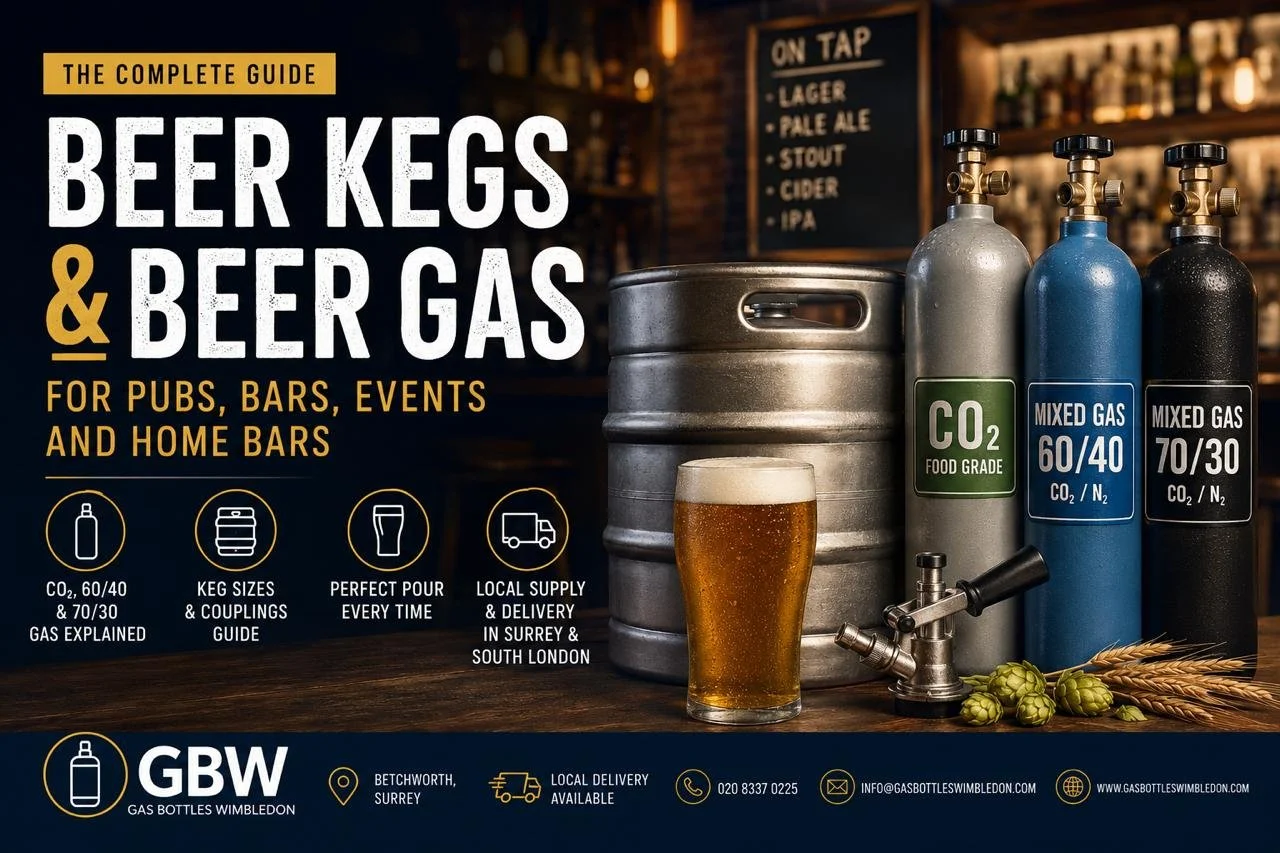
Gas Bottles Wimbledon supplies beer kegs, bottled beers and drinks-dispense gas to pubs, bars, restaurants, sports clubs, event organisers and home-bar owners across Surrey and much of South London. From our Betchworth depot, customers can obtain beer gas and kegs from one experienced local supplier.
What Is Beer Gas?
Beer gas, sometimes called keg gas, cellar gas or drinks-dispense gas, is used to move beer from a keg through the beer line and out of the tap. Depending on the drink and dispense system, the cylinder may contain food-grade carbon dioxide, a mixture of carbon dioxide and nitrogen, or another brewer-approved dispense gas.
The gas does more than push the liquid through the system. It helps maintain the correct level of carbonation inside the keg. Selecting the wrong gas or using an unsuitable pressure can lead to excessively foamy beer, a flat pint, inconsistent pouring or unnecessary product waste.
Always follow the brewer's instructions and the recommendations of your cellar-services or dispense-equipment provider when selecting a gas mixture and setting the operating pressure.
Why Does the Correct Beer Gas Matter?
Always follow the brewer's instructions and the recommendations of your cellar-services or dispense-equipment provider when selecting a gas mixture and setting the operating pressure.
Draught beers, lagers, ciders, ales and stouts do not all have the same carbonation level or serving characteristics. A highly carbonated lager normally requires a different gas composition from a smooth stout.
Using the appropriate dispense gas can help you:
Maintain the intended carbonation of the drink.
Produce the correct head and mouthfeel.
Reduce excessive frothing and wasted beer.
Deliver a more consistent pint from the first serving to the last.
Protect the flavour and presentation intended by the brewer.
Operate the draught system more efficiently.
For pubs, bars and restaurants, poor dispense performance can quickly become expensive. Even a small amount of avoidable wastage from every keg can affect margins, particularly at busy venues and events.
What Types of Beer and Drinks Gas Does GBW Supply?
GBW stocks three principal types of beer and drinks-dispense gas: CO₂, 60/40 mixed gas and 70/30 mixed gas.
Food-Grade CO₂
Carbon dioxide is commonly used for post-mix soft drinks and selected highly carbonated beers, lagers and ciders. At GBW, the CO₂ option may be recommended for drinks such as post-mix soft drinks and certain lagers, including Peroni and San Miguel, depending on the installation and brewer's requirements.
CO₂ helps maintain a lively level of carbonation. However, it should only be used where it is compatible with the drink and dispense system.
60/40 Beer Gas
A 60/40 mixture contains a higher proportion of carbon dioxide than nitrogen. It is commonly used for many lagers and ciders where a crisp, refreshing and properly carbonated finish is required.
GBW customers commonly use 60/40 mixed gas for drinks including Singha, Birra Moretti and Bear Island, subject to the brewer's dispense instructions and the configuration of the bar system.
70/30 Beer Gas
A 70/30 mixture contains a greater proportion of nitrogen and a lower proportion of carbon dioxide. It is generally associated with stouts, smooth ales and cask-style products that require a smoother mouthfeel and a creamy, stable head.
This type of mixed gas is frequently used for drinks such as Guinness, selected ales and smooth-flow beers. The exact gas and pressure must always follow the brewer's specification.
Which Beer Gas Do I Need?
| Gas type | Common applications | Typical characteristics |
|---|---|---|
| Food-grade CO₂ | Post-mix soft drinks and selected lagers or ciders | Helps maintain higher carbonation and a lively finish |
| 60/40 mixed gas | Many lagers, premium lagers, pale ales and selected ciders | Crisp dispense with a balanced level of carbonation |
| 70/30 mixed gas | Guinness, stouts, smooth ales and selected cask products | Smoother texture with a dense, creamy head |
This table provides general guidance rather than a universal rule. Beer brands can have specific requirements, and dispense systems vary according to cellar temperature, beer-line length, vertical lift and equipment configuration.
Check the keg label, brewer's technical information or your cellar-service instructions before connecting a new keg. When contacting GBW, tell our team the beer brand, keg type and gas currently connected to your system so we can help identify the appropriate product.
Beer Kegs for Pubs, Restaurants, Events and Home Bars
GBW supplies an extensive selection of beer, lager and cider kegs. Available lines can include popular draught brands such as Guinness, Peroni, San Miguel, Birra Moretti, Madri, Stella Artois, Heineken, Asahi, Carling, Amstel, Fosters, Strongbow and many others.
Our online range includes 30-litre kegs, larger 11-gallon kegs and selected mini kegs. Availability can change, so customers should contact GBW for current stock, prices and special orders.
30-Litre Beer Kegs
A 30-litre keg can be a practical choice for smaller venues, mobile bars, private functions and home-bar installations. Its smaller capacity may help venues offer a wider range without opening more beer than they can sell within an appropriate period.
11-Gallon Beer Kegs
An 11-gallon keg is commonly used by pubs, restaurants, sports clubs and higher-volume bars. These kegs offer a larger number of servings and are well suited to popular draught lines with consistent demand.
Mini Kegs
Mini kegs are designed primarily for smaller gatherings and domestic use. They can be suitable for parties, barbecues and customers who want draught-style beer without installing a full commercial keg system.
GBW can also help source beer brands that may not currently be displayed in the online shop. Businesses purchasing regular or larger quantities can ask about trade-account options and quantity pricing.
Which Keg Coupling Do I Need?
Buying the correct beer is only one part of the process. The keg must also be compatible with the coupling attached to your dispense system. Attempting to connect an incompatible coupler may damage equipment or prevent the keg from dispensing.
A-Type Coupling
Commonly used by brands and breweries including Guinness, Singha, Bear Island, Shepherd Neame, Spitfire, Neck Oil and Whitstable Bay.
G-Type or Grundy Coupling
Commonly associated with products such as Carling, Thatchers and Madri.
S-Type or Sankey Coupling
Used by many widely sold brands, including Fosters, Birra Moretti, Amstel, Kronenbourg, Carlsberg, San Miguel, Strongbow, Estrella Damm, Peroni, Cruzcampo, Asahi and Heineken.
U-Type Coupling
Commonly associated with Stella Artois.
Coupling requirements can change between product ranges or keg formats. Check the keg and obtain confirmation before ordering equipment or changing a draught line.
Commercial Beer Gas and Keg Supply
A reliable supply of beer gas is essential for any venue operating draught lines. Running out of gas during a busy service can prevent multiple taps from working and may result in lost sales.
GBW works with customers including:
Pubs and bars.
Restaurants and hotels.
Sports clubs and social clubs.
Golf clubs and function venues.
Mobile bars and catering companies.
Festivals and outdoor-event organisers.
Wedding venues and private-event companies.
Home-bar and garden-bar owners.
Commercial customers can discuss regular supplies, trade accounts, volume requirements and the combination of kegs and dispense gas needed for their venue.
Planning Gas Stock for an Event
Event operators should avoid calculating their gas requirements purely from guest numbers. The amount needed also depends on the number of bars, draught lines, keg types, serving period and the condition and configuration of the dispense system.
Check every cylinder before service and arrange sufficient reserve capacity. Cylinders should never be connected, moved or stored by staff who have not been properly instructed.
Beer Gas and Kegs for Home Bars
Home bars and garden bars have become increasingly sophisticated, with many installations now using commercial-style taps and full-size kegs. The same dispense principles used in a pub apply to a domestic system.
A basic home-bar keg installation may require:
A suitable beer keg.
The correct keg coupling.
A compatible food-grade gas cylinder.
An approved regulator.
Beer and gas lines.
A suitable tap or beer font.
Temperature-controlled storage or cooling equipment.
Appropriate cleaning products and a cleaning routine.
Never assume that a regulator or connector is suitable simply because it appears to fit. Gas cylinders operate under pressure and all equipment must be approved for the specific gas, cylinder and operating pressure.
Beer Gas Cylinder Storage and Safety
CO₂ and mixed-gas cylinders are pressurised products and must be handled responsibly. Carbon dioxide and nitrogen can displace oxygen, making ventilation especially important in cellars and enclosed storage spaces.
Store cylinders upright and secure them against falling.
Keep cylinders in a ventilated location.
Do not expose them to excessive heat.
Use the correct regulator and approved fittings.
Check connections for damage before use.
Do not attempt to repair, modify or refill a cylinder yourself.
Keep full and empty cylinders organised and clearly identified.
Train staff who change or handle cylinders.
Follow the supplier's safety information and site risk assessment.
Businesses with cellars or confined gas-storage areas should have suitable risk controls, ventilation and gas-detection arrangements where required.
Beer Gas and Keg Supplier for Surrey and South London
Gas Bottles Wimbledon is based at Moore's Open Storage, Reigate Road, Betchworth, Surrey RH3 7HB. Although our depot is now in Betchworth, we continue to serve customers across Wimbledon, South West London and surrounding areas of Surrey.
Our beer and keg service is suitable for customers in areas including Betchworth, Reigate, Redhill, Dorking, Epsom, Wimbledon, Raynes Park, Morden, Mitcham, Tooting, Putney, Wandsworth, Kingston and nearby locations within our delivery area.
Customers can contact us for beer-gas availability, keg pricing, current beer brands, delivery arrangements and trade-account enquiries.
Order Beer Kegs and Beer Gas from GBW
Whether you operate a pub, restaurant, sports club, mobile bar, event venue or home bar, GBW can help you source beer kegs and the appropriate drinks-dispense gas.
Call 020 8337 0225 or email info@gasbottleswimbledon.com to discuss availability, delivery, collection and trade-account options.
Browse Beer & LagerRead Our Bar Help GuideContact GBW
Frequently Asked Questions
-
Beer kegs may use food-grade CO₂ or a mixture of carbon dioxide and nitrogen. The correct option depends on the beer, keg, draught system and brewer's dispense specification.
-
A 60/40 carbon dioxide and nitrogen mixture is commonly used for many lagers, premium lagers, pale ales and selected ciders where a crisp, carbonated dispense is required.
-
A 70/30 mixture with a higher nitrogen content is generally used for Guinness, stouts, smooth ales and similar drinks that require a creamy texture and dense head.
-
No. Different drinks and draught systems can require different gas mixtures and pressures. Always follow the brewer's instructions or obtain advice from your cellar-services provider.
-
Yes. GBW supplies beer and lager kegs, selected mini kegs, bottled beers and drinks-dispense gas. The team can also help source beer brands that are not currently displayed online.
-
GBW offers trade-account options for suitable commercial customers. Contact the team to discuss your venue, expected order frequency and product requirements.
-
GBW supplies beer gas from its depot at Moore's Open Storage, Reigate Road, Betchworth, Surrey RH3 7HB, serving customers across Surrey and much of South London.